Spider Watercolor Clipart Bundle
There is a certain charm to watercolor that digital vectors rarely replicate. The organic bleed, the unpredictable edges, the way pigment settles on paper—it conveys a handmade authenticity that resonates with audiences tired of sterile, cookie-cutter graphics. The Spider Watercolor Clipart Bundle taps directly into that aesthetic, offering a collection that feels both moody and approachable. Whether you are building a Halloween campaign, designing packaging for a niche indie brand, or crafting social content for a nature-focused publication, this bundle brings a tactile, painterly quality that standard clipart collections miss.
Visual character and artistic personality
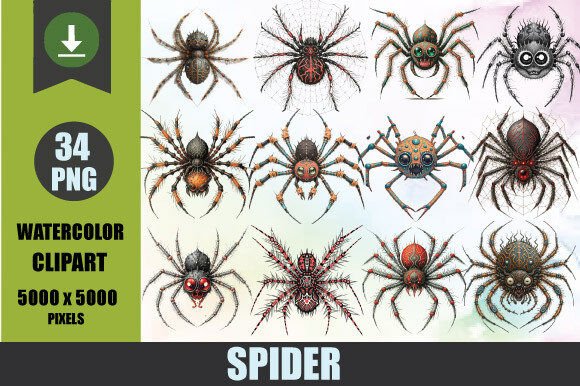
At first glance, the bundle reads as darkly whimsical rather than frightening. The watercolor washes soften the natural edges of spider forms, webbing, and accompanying botanical elements, giving them an almost ethereal presence. Deep indigos, muted purples, charcoal grays, and occasional earthy rust tones create a palette that feels sophisticated—not cartoonish. The spiders themselves vary in scale and detail, from tight, anatomically suggestive studies to looser, more abstract interpretations that let the water medium do the work. This range is important because it gives you choices: a more detailed spider works well as a hero element on a product label, while a loose, splashy version backgrounds a website hero section without competing with text.
The personality here is intentionally ambiguous. It can read as gothic elegance, autumnal whimsy, or even scholarly naturalism depending on how you frame it. That tonal flexibility is what makes design assets like this valuable beyond a single holiday or campaign. A children’s book illustrator might use the softer pieces to accompany a story about garden creatures. A craft brewery could pair the same elements with a bold serif font for a stout label. The bundle does not force a mood; it suggests one, leaving room for your brand voice to lead.
Where the bundle performs best across creative projects
If you work in logo design or brand identity, these clipart elements function beautifully as accent marks or secondary visuals rather than primary logos on their own. A single watercolor spider can anchor a badge-style logo for an outdoor apparel brand or a natural skincare line. The texture adds a layer of depth that a flat vector cannot replicate, which is why many boutique brands gravitate toward hand-painted or hand-drawn assets for packaging design.
For editorial design and publishing, the bundle shines in layouts where you need a visual break without a full photograph. A full-page spread about entomology, folklore, or seasonal content can use a spider element as a marginal illustration, a chapter opener, or a subtle background texture when scaled up and lightened. The watercolor effect prevents the graphic from feeling like a stamped icon; it breathes with the page. Bloggers and content creators working with social media graphics will find that these elements elevate quote cards, promotional posts, and educational carousels. A well-placed watercolor spider behind a headline adds visual interest without demanding attention away from the message.
Small business owners running Etsy shops or independent stores can integrate the bundle into product photography, gift wrap designs, or even merchandise like tote bags and notebooks. Because the assets are clipart, they require no illustration skills to use—drop them into Canva, Photoshop, or even a word processor, and they maintain their quality. That accessibility matters when you are a solo operator juggling multiple roles.
Influence on readability, brand perception, and audience engagement
One overlooked aspect of decorative clipart is how it affects visual hierarchy. The Spider Watercolor Clipart Bundle, with its soft edges and muted saturation, naturally recedes when placed behind text, yet draws the eye when given breathing room. This makes it unusually useful for layouts where you need a graphic to support rather than overwhelm. Pair it with a clean sans serif font for a modern, editorial feel, or with a script font for a handcrafted, whimsical tone. The contrast between the organic watercolor and a structured typeface creates tension that readers find engaging—it feels curated, not chaotic.
From a brand perception standpoint, using watercolor clipart signals a certain kind of care. It suggests that time was spent on craft, that the brand values texture and imperfection over sterile precision. That emotional cue works especially well for audiences in the 20–50 age range who are skeptical of overly polished corporate aesthetics. A handwritten font paired with these elements reinforces that handmade vibe, while a display font with sharp geometric forms creates a deliberate contrast that feels contemporary. The bundle supports multiple brand personalities depending on how you combine it with modern typography choices.
Engagement often improves when visuals feel discoverable rather than obvious. Because watercolor resists absolute uniformity, each placement of a spider or web reads slightly differently—the bloom in one area differs from another. That subtle variation keeps the viewer’s eye moving across the composition. It is the same reason hand-drawn type and premium font choices feel more memorable than stock ones. Audiences unconsciously register that something was made, not just selected from a library.
Practical guidance for choosing and evaluating project fit
Before purchasing any design assets, consider the context of your project. The Spider Watercolor Clipart Bundle works best when your brand or campaign already leans toward natural, dark, or whimsical themes. If your identity is bright, minimalist, and corporate, these elements might feel visually dissonant unless used sparingly as a seasonal accent. Assess your color palette first. The bundle’s dominant tones are cool and dark, so projects rooted in warm or neon palettes may require significant color adjustment to feel cohesive.
Testing font pairings early saves time later. The bundle pairs naturally with a serif font like a classic old-style or slab serif for a literary, grounded feel. For a more contemporary approach, try a condensed sans serif font in uppercase to create a graphic, poster-like hierarchy. If you are going for a dark academic or gothic romance look, a script font with dramatic swashes can mirror the fluidity of the watercolor strokes. Avoid pairing the clipart with another heavily textured or decorative font—the visual will become noisy. Let the clipart carry the texture while the typeface provides structure and readability.
Review the included styles carefully. Some bundles offer varied opacities, sizes, and orientations, while others require you to scale and rotate elements yourself. The Spider Watercolor Clipart Bundle typically includes individual PNG files with transparent backgrounds, which gives you flexibility to layer them without additional masking work. For web design, compress the files appropriately to maintain load speed without sacrificing the watercolor texture. For print, ensure your resolution is at least 300 DPI—most quality clipart bundles supply files at that standard, but double-check before committing to large-format prints.
Readability considerations and commercial licensing
When using watercolor clipart in layouts that include text, readability remains the priority. Place your creative font choices against clean backgrounds or with sufficient contrast. If a spider element sits behind a headline, blur it slightly or reduce its opacity to avoid visual competition. Test your layout on both light and dark backgrounds—watercolor elements often look dramatically different depending on the underlying surface. A white background amplifies the paint’s transparency, while a dark surface mutes it. Plan your mockups accordingly.
Licensing is where many designers and small business owners get tripped up. The Spider Watercolor Clipart Bundle, like most premium clipart collections, typically includes a standard commercial license that covers personal projects, client work, and product packaging. However, redistribution, resale of the raw assets, or use in logo trademarks may require extended licensing. If you are a brand strategist or marketer building an identity for a client, confirm that the bundle’s license permits the intended usage—especially if the logo itself relies heavily on a clipart element. Most reputable sellers clearly state terms on the product page, but if anything is ambiguous, reach out before purchasing. A single licensing misstep can complicate your client relationship or force you to rebrand later.
For commercial font and asset investments, the same principle applies: know what you are buying and what you are allowed to do with it. The Spider Watercolor Clipart Bundle offers genuine value for the price if it matches your project’s aesthetic needs. It is not a one-size-fits-all solution, but for the right brand, publication, or campaign, it delivers a handcrafted visual language that standard clipart cannot touch.