Spider Watercolor Clipart: Artful Design Assets
The most memorable design work often achieves a delicate balance between the pristine precision of digital tools and the raw, unpredictable warmth of traditional media. For creators who want to bridge that gap, Spider Watercolor Clipart offers a compelling solution. This isn't the stiff, cartoonish clipart of the early internet era. We are talking about high-resolution, hand-painted watercolor elements, digitized with care and ready to elevate everything from a boutique brand identity to a personal art journal. If you have been searching for design assets that carry an undeniable sense of texture, mood, and craftsmanship, this collection deserves a close look.
The Visual Language of a Watercolor Collection
To understand the appeal of Spider Watercolor Clipart, it helps to look at what watercolor brings to the table that standard vector illustration cannot. Vectors are perfect for clean, scalable shapes. Watercolor, on the other hand, thrives on imperfection. It offers organic edges, subtle color blooms, and the kind of depth that makes a digital design feel like a physical artifact.
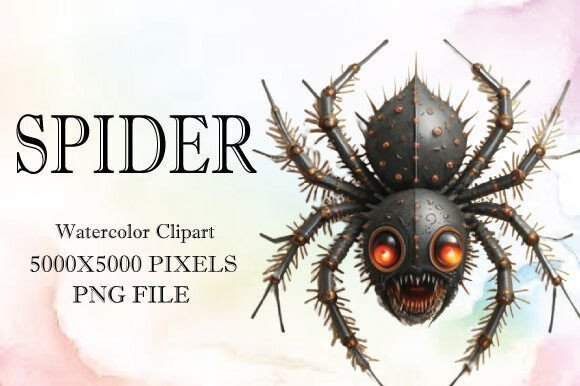
The specific personality of this clipart set leans into a sophisticated, slightly moody aesthetic. The color palette typically revolves around deep charcoal blacks, soft sepia tones, muted greens, and the occasional pop of jewel-toned purple or crimson. These are not bright, primary colors. They are nuanced hues that suggest maturity and artistic intent. The spiders themselves are rendered with a level of detail that feels respectful to the subject—delicate legs, subtle shadowing, and often accompanied by complementary elements like ink splatters, vintage botanical accents, or delicate cobwebs. This is modern typography and illustration intertwined with an old-world sensibility.
For a brand or project, adopting this style signals a few things immediately. It tells your audience that you value texture over flatness, organic beauty over sterile perfection, and emotional resonance over simple clarity. That distinction is the foundation of a strong visual brand identity.
Where Organic Texture Meets Professional Design
One of the strongest arguments for investing in a premium set of watercolor elements is their staggering versatility across different media. Unlike a niche display font that only works for headlines, Spider Watercolor Clipart can be adapted to fit both digital screens and physical printed products with equal impact.
Branding and Logo Design
If you are working on a brand identity for a creative agency, an organic apothecary, a nature-focused lifestyle blog, or a specialty coffee roaster, these assets are pure gold. A single, well-placed watercolor spider combined with a refined serif font or a minimalist sans serif font creates a logo that feels both handcrafted and professional. The contrast between the organic texture of the clipart and the clean lines of modern typography creates visual tension that draws the eye. It is a look that is difficult to achieve without a dedicated set of coordinated illustrations.
Editorial and Print Layouts
Publishers and content creators know that a striking layout is about more than just the text. Spider Watercolor Clipart works beautifully as drop caps, full-page background washes, or decorative dividers between sections. Imagine a literary magazine featuring a dark fiction story with a faint watercolor spider watermark layered behind the title. It adds an atmospheric layer without demanding attention away from the typeface itself. For editorial design, these assets provide that extra 10% of polish that separates amateur layouts from professional publications.
Packaging and Product Design
This is perhaps where watercolor assets shine brightest. Small business owners in the handmade goods space—candle makers, soap crafters, tea blenders—can use these elements to create packaging design that looks like it came from a high-end boutique. A matte black label with a single, elegant watercolor spider and a clean handwritten font communicates luxury, artisanal quality, and attention to detail. It transforms a simple jar or box into a curated experience.
Digital Spaces and Social Media Graphics
In the crowded world of social media, getting someone to stop scrolling is half the battle. Using Spider Watercolor Clipart as an overlay for photos, or as a decorative frame for quotes, gives your Instagram feed or blog graphics a cohesive, artistic feel. They work exceptionally well as website dividers or hero section backgrounds, adding depth to the user interface without slowing down load times when properly optimized.
Building Brand Perception Through Artistic Assets
The assets you choose to represent your business directly influence how your audience perceives your value. High-quality, textured assets like Spider Watercolor Clipart communicate a commitment to artistry. They make an unspoken promise that you care about the details. For marketers and brand strategists, this is the foundation of brand recognition and audience engagement.
Consider the concept of visual hierarchy. If you use a heavily textured background, you must balance it with clean typography. The clipart should frame your message, not fight it. When used effectively, the watercolor element becomes an anchor for the composition. It creates a focal point that naturally guides the reader's eye toward the headline or the product. This intuitive flow is crucial for effective communication. It is the difference between a design that feels chaotic and one that feels thoughtfully composed. By using a cohesive set, you ensure that all your materials—from your website to your business card—share the same artistic DNA. That consistency builds trust and reinforces your brand identity every time a customer interacts with your work.
Choosing and Pairing Your Watercolor Elements
To get the most out of any creative font or design asset, you need to approach it with a strategy. Simply dropping a watercolor spider onto a page is not enough. Consideration for context, technical limitations, and complementary elements is essential.
Technical Specifications and Resolution
Before you commit to any design asset, check the technical specs. For print work, you need files at 300 DPI with transparent PNG backgrounds. High resolution ensures that the watercolor texture remains crisp and detailed rather than pixelated. Many premium sets also include SVG or AI files for those who need to scale the elements up significantly. Always verify that the color mode matches your project—CMYK for print, RGB for web.
Strategic Font Pairing for Maximum Impact
Because Spider Watercolor Clipart has such a strong personality, your choice of font pairings matters immensely. You are looking for contrast or harmony, but you must be intentional.
- With a Sans Serif Font: A clean, geometric sans serif like Montserrat or Proxima Nova provides a stark, modern contrast to the organic watercolor texture. This is a safe and highly effective pairing for web design and modern branding.
- With a Serif Font: A refined serif font like Playfair Display or Cormorant Garamond can harmonize beautifully with the artistic, classic feel of watercolor. This pairing works well for editorial design and luxury packaging.
- With a Script Font or Handwritten Font: This is where you need to be careful. A delicate script can look stunning over a watercolor wash, but it can easily become unreadable if the background is too busy. Use the watercolor element as a subtle accent or behind large lettering only. A bold, modern script or a thick brush font tends to hold its own much better against heavy texture.
Navigating Commercial Licensing
For entrepreneurs and designers working with clients, licensing is a non-negotiable check. Understand the difference between a standard license and an extended license. A standard license usually covers personal projects and limited commercial sales (like a small run of printed cards). An extended license is typically required for larger print runs, merchandise for sale, or integrating the asset into a digital product for resale (like a logo template). Always read the fine print. Using a clipart set without the proper commercial font or asset license can lead to legal headaches down the line. A reputable seller will make these terms clear.
Ultimately, Spider Watercolor Clipart represents a growing trend in design: a return to tactility and artistic authenticity within the digital space. Whether you are a seasoned graphic designer or a small business owner building your brand from scratch, these assets offer a practical, beautiful way to add depth and emotion to your work. Focus on balance, pair your elements with clean typography, and let the natural character of the watercolor medium tell a story that flat vectors simply cannot.